Can You Drink Coffee While Pregnant? A Calm Look at Caffeine Limits
How much caffeine is considered OK in pregnancy, where it hides beyond coffee, and simple ways to stay under the limit without giving up your morning cup.
For many people, the first pregnancy question that comes up is not about scans or due dates. It is about coffee. The good news is that most guidance does not ask you to give up caffeine completely. It asks you to keep an eye on the total amount across your day.
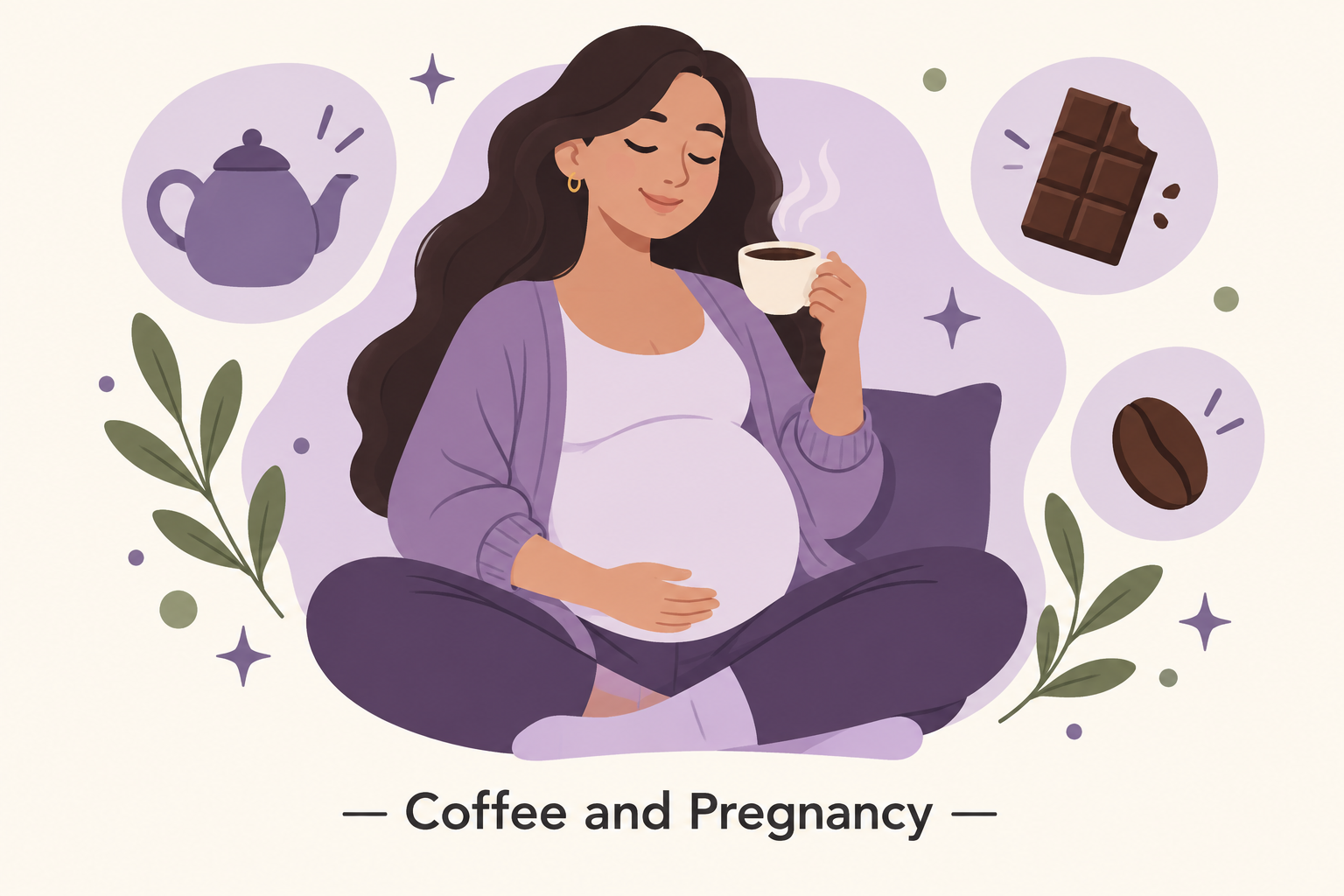
This guide explains where the common limit comes from, how much caffeine is actually in the drinks and foods you might have, and a few easy ways to stay under the line without feeling deprived.
What the common guidance says
The figure you will see most often, including from the NHS and the American College of Obstetricians and Gynecologists, is around 200 mg of caffeine per day during pregnancy. That is roughly one strong mug of filter coffee, or two smaller cups of instant.
Why a limit at all? Caffeine crosses the placenta, and a developing baby processes it much more slowly than you do. Studies have linked high caffeine intake, usually well above 200 mg a day, with a higher chance of low birth weight and, in some research, miscarriage. The evidence at moderate intakes is much weaker, which is why the guidance is a limit rather than a ban.
It is worth knowing that these numbers are cautious by design. They are set low enough to give a comfortable margin, not drawn at the exact point where harm begins.
How much caffeine is in everyday drinks
The tricky part is that caffeine content varies a lot. A mug of instant coffee and a mug of strong filter coffee can be two or three times apart. Here are rough averages to help you count:
- Mug of instant coffee: about 100 mg
- Mug of filter coffee: about 140 mg
- Single espresso shot: about 60 to 80 mg
- Mug of tea: about 75 mg
- Green tea, per mug: about 30 to 50 mg
- Can of cola: about 30 to 40 mg
- Energy drink, per 250 ml can: about 80 mg
- 50 g bar of dark chocolate: about 25 mg
- 50 g bar of milk chocolate: about 10 mg
Coffee shop drinks deserve a special mention. A large latte from a high street chain can contain two or three shots of espresso, pushing a single drink close to or past 200 mg on its own. If you buy coffee out, asking how many shots are in your size is a genuinely useful habit.
The caffeine you forget about
Coffee and tea are obvious. The ones that catch people out are:
- Chocolate, especially dark chocolate and cocoa powder in baking or hot chocolate.
- Energy drinks, which often combine caffeine with other stimulants.
- Some cold and flu remedies and painkillers, which can contain caffeine as an active ingredient. The leaflet or pharmacist can tell you.
- Green tea and matcha, which feel gentle but still count.
- Decaf, which is not zero. A cup of decaf coffee still has around 2 to 5 mg, which is fine, but good to know if you drink several.
Adding everything up once, on a normal day, is often reassuring. Many people find they were already under 200 mg without trying.
Simple ways to stay under the limit
If your usual routine adds up to more than 200 mg, a few small swaps tend to work better than going cold turkey, which can bring on headaches and tiredness for a few days.
- Switch one coffee a day for decaf or tea.
- Order the small size instead of the large when you are out.
- Make instant coffee slightly weaker, or use one heaped teaspoon instead of two.
- Swap an afternoon cola for sparkling water with fruit.
- Taper down over a week rather than stopping suddenly.
If you are also feeling queasy, you may find caffeine and pregnancy interact with sleep and nausea in ways that change what feels good anyway. Our post on caffeine, sleep and anxiety in pregnancy goes into that side of things.
What about the first trimester specifically
Some older advice suggested avoiding caffeine entirely in the first twelve weeks. Current mainstream guidance does not say that. The 200 mg daily limit applies throughout pregnancy, including the first trimester. If you are struggling with morning sickness, you may find that coffee tastes or smells unappealing for a while anyway. That is common and usually temporary.
A quick way to sense check your day
If you want a rough total without a spreadsheet, count your day in units of 100 mg. Instant coffee, a mug of tea, an energy drink and a strong shop coffee each count as roughly one unit. Filter coffee counts as one and a half. Keep the total at two units or fewer and you are comfortably inside the guidance.
When to ask your midwife or doctor
Guidance is general, and your situation might not be. If you have been told you are at higher risk of complications, or you are taking medication that interacts with caffeine, ask your midwife or GP what limit makes sense for you. The same applies if you are finding it hard to cut down. They will have heard the question many times before.
The short version: one normal coffee a day, or two teas, sits well inside the common 200 mg limit. Count the hidden sources once, make one or two swaps if you need to, and then you can stop thinking about it.
Try the calculators
More in Food & drink
 Eating for Two? What Appetite Changes Actually Look Like Week by Week12 November 2026
 Cravings in Pregnancy: What They Mean and When They Start5 November 2026
 Pregnancy Food Rules Everywhere: How to Stay Sane Without Ignoring Safety15 August 2026