Eating for Two? What Appetite Changes Actually Look Like Week by Week
What eating for two really means in calories, how appetite shifts across the trimesters, and how to eat well when nausea, fullness or hunger take turns running the show.
"Eating for two" is one of those phrases everyone has heard and almost nobody finds useful. Taken literally it suggests doubling your food, which is not what any guideline recommends. Taken too dismissively it hides the fact that your body genuinely is doing extra work. This post walks through what appetite and energy needs actually look like across pregnancy, so the changes you notice week to week feel expected rather than alarming.
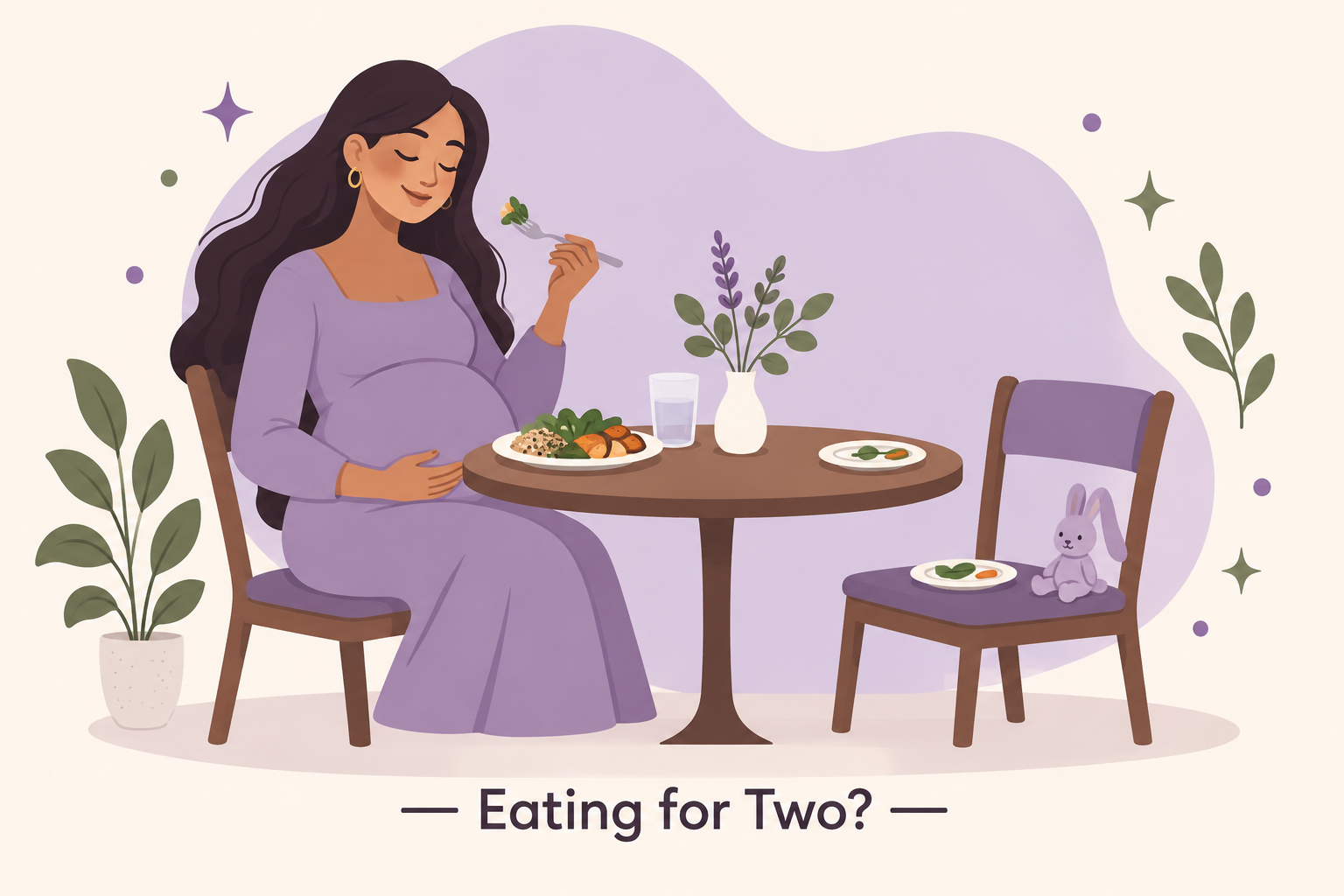
What eating for two really means in numbers
The figures most guidelines land on are surprisingly modest:
- First trimester (weeks 1 to 13): no extra calories needed for most people. Your baby is tiny and your existing intake covers it.
- Second trimester (weeks 14 to 27): roughly 300 to 350 extra calories a day. That is a sandwich and a piece of fruit, not a second dinner.
- Third trimester (weeks 28 onwards): around 450 extra calories a day for many guidelines, though the NHS simply suggests a small extra snack in the final months.
These are averages for a singleton pregnancy. Twins, a very active job or a low starting weight change the picture, and your midwife can tailor it.
Weeks 1 to 13: the nausea weeks
The first trimester is famous for one thing: the mismatch between what you are told to eat and what you can face. Morning sickness, which can strike at any hour, often peaks between weeks 8 and 12. Appetite commonly drops, and aversions to meat, coffee and strong smells are common.
What tends to help:
- Eat small amounts often. An empty stomach usually feels worse.
- Plain carbohydrates are your friends: toast, crackers, rice, plain pasta.
- Cold food smells less than hot food, which matters when smell is the trigger.
- Eat whatever safe food appeals. A fortnight of mostly beige food will not harm your baby.
If you cannot keep fluids down for 24 hours, or you are losing weight quickly, contact your midwife or GP. Severe sickness, called hyperemesis gravidarum, is a medical condition, not something to push through.
Weeks 14 to 27: appetite returns
Many people feel dramatically better as the second trimester begins. Nausea fades, energy comes back, and food starts tasting good again. Appetite often rises noticeably, and this is also when cravings tend to be at their strongest.
This is the trimester where steady habits pay off:
- Aim for regular meals with protein, wholegrains, fruit and vegetables, rather than grazing all day.
- Keep snacks you actually like within reach, so hunger does not catch you with only vending machine options.
- Do not be surprised by sudden, specific hunger. It is normal to go from fine to ravenous in twenty minutes.
Weight gain usually becomes visible in this trimester. Guidelines commonly suggest around 11 to 16 kg total across pregnancy for someone starting at a typical weight, most of it arriving from week 14 onwards. Your midwife tracks the pattern, not the daily number.
Weeks 28 to 40: hungry but full
The third trimester brings a strange combination: your calorie needs are at their highest, but your stomach has the least room. The baby is pressing up against your digestive organs, so big meals can cause heartburn, breathlessness and a feeling of being full after a few bites.
The practical answer is to shrink the meals and add snacks:
- Five or six small eating occasions usually work better than three large ones.
- Finish eating a couple of hours before lying down to limit heartburn.
- Energy dense, small foods help: nuts, yoghurt, cheese, eggs, hummus, dried fruit.
- Keep drinking water even when everything feels squashed.
Appetite sometimes dips again in the final weeks, and some people feel queasy in early labour. Both are normal.
What about weight gain worry
Pregnancy weight gain is one of the most quietly stressful parts of the experience, partly because everyone has an opinion about it. A few grounding facts:
- The gain is not just baby. Placenta, amniotic fluid, extra blood, breast tissue and fat stores account for most of it.
- Guidelines give ranges, not targets. Landing a little outside the range is common and usually fine.
- Nobody should be dieting for weight loss during pregnancy unless their own medical team has asked them to.
If the numbers on the scale are bothering you, that is a good conversation for an appointment, not a search engine at midnight.
A note on the emotional side
Food during pregnancy carries more than nutrition. Comfort eating when you are anxious, guilt after reading food rules, frustration when nothing appeals: all of it is common. We have written more about this side in Pregnancy anxiety and comfort eating, and about keeping food rules in proportion in Pregnancy food rules everywhere.
The short version
First trimester: eat what you can keep down, little and often. Second: enjoy the return of appetite with reasonably steady meals. Third: small meals, more often, with snacks carrying the load. Eating for two really means eating thoughtfully for one and a bit, and giving yourself grace on the weeks when even that feels like a lot.
Try the calculators
More in Food & drink
 Cravings in Pregnancy: What They Mean and When They Start5 November 2026
 Can You Drink Coffee While Pregnant? A Calm Look at Caffeine Limits29 October 2026
 Pregnancy Food Rules Everywhere: How to Stay Sane Without Ignoring Safety15 August 2026