Cravings in Pregnancy: What They Mean and When They Start
When pregnancy cravings usually begin, what might be behind them, how to handle the odd ones, and when a craving is worth mentioning to your midwife.
Pickles with ice cream. A sudden, urgent need for oranges at 10 pm. Going off the coffee you used to love. Cravings and food aversions are among the most talked about parts of pregnancy, and also among the least understood. This guide covers what is actually known: when they tend to start, what might drive them, and the few situations where a craving is worth a conversation with your midwife.
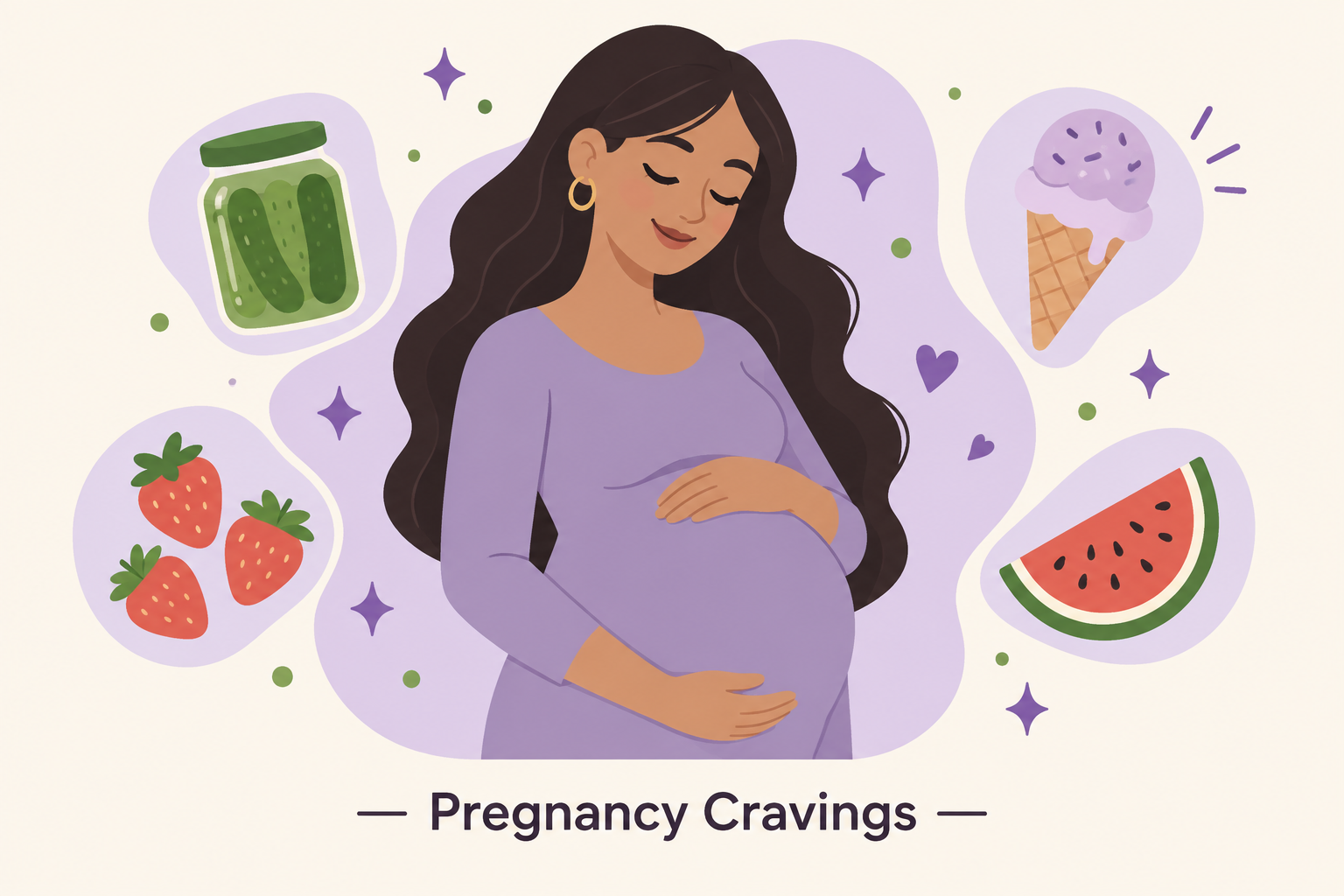
When cravings usually start
Most people who experience cravings notice them in the first trimester, often somewhere between weeks 5 and 12. They tend to peak in the second trimester and ease off in the third, although there is no fixed schedule. Some people never get a strong craving at all, and that is just as normal.
Cravings often arrive alongside food aversions, which are the same phenomenon in reverse. Foods you enjoyed for years can suddenly seem revolting, sometimes at the level of smell rather than taste. Coffee, meat and eggs are common casualties.
If you are early in pregnancy and wondering where your own cravings are, the honest answer is that they may show up soon, or not at all. Both are ordinary.
What might be behind them
Nobody knows for sure what causes pregnancy cravings, and anyone who tells you otherwise is overstating the science. There are a few reasonable theories:
Hormones. The huge hormonal shifts of early pregnancy affect taste and smell. Heightened smell sensitivity in particular can make some foods irresistible and others unbearable.
Nausea management. Some researchers think cravings and aversions are partly about steering you towards foods that feel safe and away from ones that might upset a sensitive stomach. Bland carbohydrates are famously appealing in the first trimester, which fits this idea.
Comfort and emotion. Food is emotional, and pregnancy is an emotional time. Wanting a specific comfort food when you are tired, queasy and anxious does not need a deep biological explanation.
Nutrient signalling. This is the popular theory, that a craving for red meat means you need iron, or that chocolate means you need magnesium. It is a tidy story, but the evidence for it is weak. Cravings do not reliably map to deficiencies.
The most common cravings
Surveys of pregnant people turn up the same foods again and again:
- Fruit and fruit juice, especially citrus
- Chocolate and other sweets
- Ice cream and dairy
- Salty or crunchy snacks like crisps and pickles
- Bread, toast and plain carbohydrates
- Spicy food
You will notice these are mostly ordinary, enjoyable foods. That is part of why the deficiency theory struggles: people rarely crave spinach and liver.
When a craving is worth mentioning
Most cravings are harmless. Two patterns deserve a mention to your midwife or doctor:
Craving non food items. An urge to eat things like ice, clay, chalk, dirt, soap or laundry starch is called pica. Craving and chewing ice alone is often linked to iron deficiency and is easy to check with a blood test. Other non food cravings can point to deficiencies too, and eating some of these substances can be harmful, so this one is always worth raising.
Cravings driving a very narrow diet. If nausea or aversions mean you are eating the same two or three foods for weeks, mention it. Usually a way through can be found, and your team can check whether you are missing anything important.
Handling cravings without a rulebook
The internet is full of lists of foods to avoid in pregnancy, and cravings can make those lists feel loaded with guilt. A calmer approach:
- Mostly follow the craving. If you want a food that is safe in pregnancy, have it. Enjoyment matters.
- Pair treats with something steady. Crisps alongside lunch rather than instead of it keeps your energy more even.
- Keep easy wins around. If fruit is what you want, washed and ready fruit in the fridge makes the craving work for you.
- Do not panic about weight. Appetite varies hugely across trimesters. Our post on appetite changes week by week covers the bigger picture.
If food rules in general are starting to feel overwhelming, Pregnancy food rules everywhere is a calm read on keeping safety advice in proportion.
Cravings and the people around you
A small practical note: cravings are real, but so is the comedy of sending a partner out at night for one specific thing. If it helps, treat it as part of the experience rather than an embarrassment. Most partners, looking back, rank the midnight snack runs among their clearest pregnancy memories.
It can also help to say out loud what you actually want. "I do not know what I want, but not that" is a real and valid first trimester state, and the people feeding you will cope better with a moving target if they know it is moving.
The short version
Cravings are common, usually strongest in the first half of pregnancy, and only loosely understood. Enjoy the harmless ones, keep an eye on anything unusual, and mention non food cravings to your midwife. In a part of life full of things to monitor, this is one you are mostly allowed to simply experience.
Try the calculators
More in Food & drink
 Eating for Two? What Appetite Changes Actually Look Like Week by Week12 November 2026
 Can You Drink Coffee While Pregnant? A Calm Look at Caffeine Limits29 October 2026
 Pregnancy Food Rules Everywhere: How to Stay Sane Without Ignoring Safety15 August 2026