Gestational Age vs Fetal Age: Why They’re Different
A calm explanation of why doctors count pregnancy weeks from your last period and why that number is usually about two weeks ahead of conception.
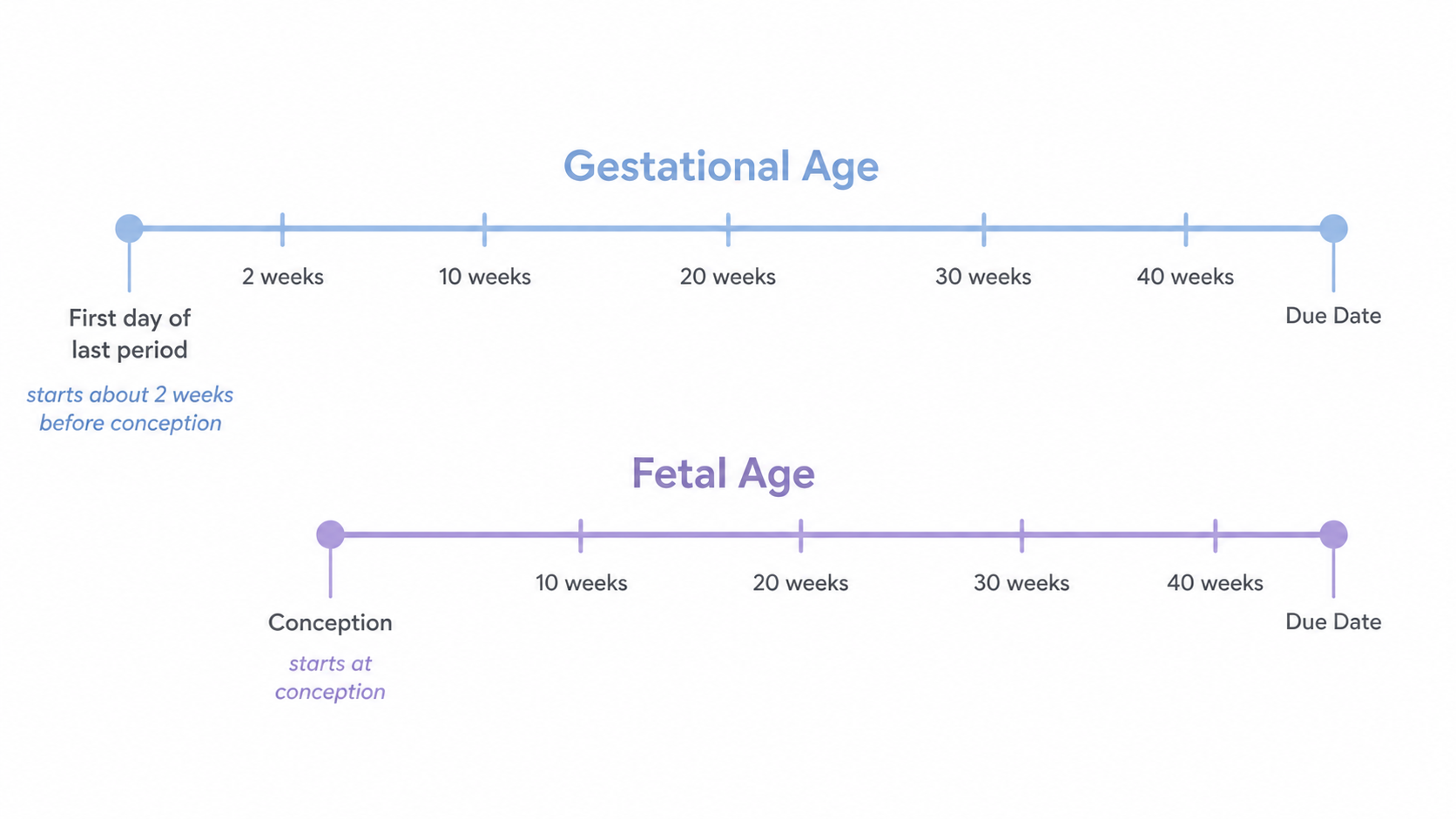
Many people are surprised when they learn they are “10 weeks pregnant” even though they think conception happened only 8 weeks ago. It can feel like two extra weeks appeared from nowhere. The difference comes from how healthcare professionals define gestational age and fetal age, and how they use those numbers to estimate due dates.
Important: This is general information only. It cannot replace advice from your midwife, obstetrician or fertility team. Always discuss your own dates and care plan with a healthcare professional.
What is gestational age?
Gestational age is the main way pregnancies are dated in clinics. It counts from the first day of your last menstrual period (LMP), not from the day of conception.
- If your last period started 10 weeks ago, your gestational age today is usually called 10 weeks, even though conception likely happened later.
- This number appears in clinic letters, ultrasound reports and many pregnancy tools as “weeks pregnant”.
Gestational age is used because the first day of a period is usually easier to remember than the exact day of ovulation or implantation. It gives doctors and midwives a concrete calendar date to work from when planning tests and appointments.
What is fetal age?
Fetal age (sometimes called conception age) tries to measure the time since fertilisation:
- It starts around the time the egg and sperm meet.
- In a typical 28‑day cycle with ovulation on day 14, fetal age is about two weeks less than gestational age.
So if your gestational age is 10 weeks, the fetal age is roughly 8 weeks. This better reflects how long the embryo or fetus itself has been developing, but it is harder to know exactly without detailed cycle tracking or assisted reproduction.
Why gestational age is usually about two weeks ahead
The usual two‑week difference comes from how cycles are counted:
- Gestational age starts on day 1 of your period.
- Ovulation and conception typically happen about two weeks later.
- By the time you miss a period and get a positive test, you are already about 4 weeks gestational age, even though conception happened around 2 weeks earlier.
This is why many people feel they are “only 2 weeks pregnant” when they see a positive test, but their doctor says “4 weeks”. They are both talking about the same pregnancy, just using different starting points.
Why clinicians prefer gestational age
Clinicians mainly use gestational age because it is practical:
- It is anchored to an easily recorded date (the first day of your period).
- It lines up with long‑established schedules for scans and screening tests.
- It keeps everyone (you, your midwife, your obstetrician and your sonographers) talking about the same week number.
Even when early ultrasound is used to refine the timing, the result is still expressed as a gestational age and a due date based on that number. Fetal age is more of a background concept than a number used in day‑to‑day care.
How this affects your due date
Pregnancy due dates are almost always given using gestational age:
- A “40‑week” pregnancy is counted from the first day of your last period to your estimated due date.
- Fetal age at that point is around 38 weeks, reflecting the time since conception.
That means due date calculators and clinic charts may feel “two weeks ahead” of what you expect if you are thinking in terms of conception alone. Understanding the difference between gestational and fetal age can make those numbers feel less confusing.
Why different apps can show different numbers
Some apps and tools:
- Always use gestational age based on LMP.
- Allow you to enter a conception date or IVF transfer date and then convert it into gestational age.
- Adjust your gestational age if you enter ultrasound information from a first‑trimester scan.
Because different apps may handle these inputs in slightly different ways, they can display different week numbers even for the same pregnancy. When in doubt, it is safest to follow the gestational age and due date given by your healthcare team.
A gentle takeaway
If your doctor says you are 10 weeks pregnant while you feel conception happened about 8 weeks ago, nothing strange has happened. You are both describing the same pregnancy using different clocks:
- Gestational age: from the first day of your last period.
- Fetal age: from conception.
Knowing which clock you are looking at can make clinic notes, apps and calculators easier to understand — and it can help you feel more confident when you see those week numbers change over time.
Try the calculators
More in Pregnancy weeks
 Pregnancy Weeks vs Months: Why the Numbers Never Match Perfectly10 September 2026
 Why Pregnancy Is Counted From Your Last Period, Not Conception3 September 2026
 Understanding Trimester Boundaries: Where One Stage Ends and Another Begins24 July 2026