Pregnancy Weeks vs Months: Why the Numbers Never Match Perfectly
A simple explanation of why pregnancy weeks and calendar months do not line up neatly.

People often ask how many months pregnant they are and receive several different answers. One app may call 20 weeks five months. Another may call it four and a half months. A relative may use a completely different system. The problem is not that someone is bad at counting. Pregnancy weeks and calendar months are built on different units of time.
Pregnancy care uses weeks because weeks are more precise. Calendar months have different lengths, while a week always has seven days. When appointments, scans and development are discussed, a difference of a few days can matter more than it does in ordinary conversation. That is why clinicians tend to say 12 weeks or 20 weeks rather than three months or five months.
Why the maths feels awkward
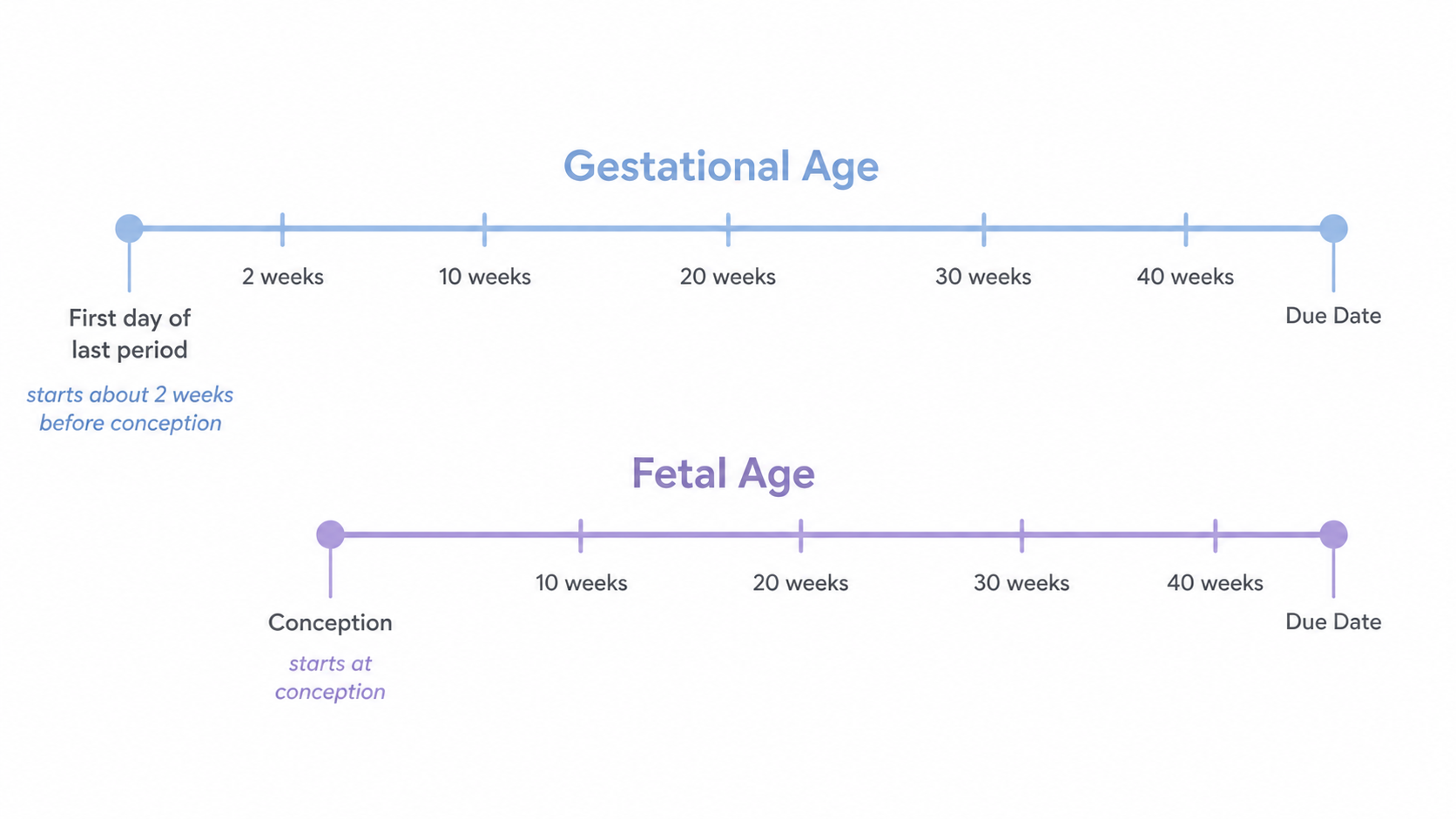
A typical pregnancy is described as 40 weeks from the first day of the last period. Forty weeks is 280 days. Calendar months are not all four weeks long. Some have 28 days, some 30, and some 31. If every month were exactly four weeks, 40 weeks would equal 10 months. But calendar months are longer than four weeks on average.
That is why a 40-week pregnancy is often spoken about as around nine calendar months, even though it contains ten groups of four weeks. Both descriptions are using different ways of dividing the same time.
Weeks are the reliable anchor
If you are trying to work out timing for a scan, an appointment, a test or a maternity milestone, use weeks and days. A clinic may write 12+3, which means 12 completed weeks and 3 days. This is much clearer than saying roughly three months.
Months are useful for casual conversation. You might say you are about five months pregnant because it gives people a general idea. But for practical planning, the week number is the better anchor.
A simple month guide
There is no single official week-to-month conversion used everywhere. Still, this rough guide is often useful for everyday conversation:
- Weeks 1 to 4: month 1
- Weeks 5 to 8: month 2
- Weeks 9 to 13: month 3
- Weeks 14 to 17: month 4
- Weeks 18 to 22: month 5
- Weeks 23 to 27: month 6
- Weeks 28 to 31: month 7
- Weeks 32 to 35: month 8
- Weeks 36 to 40: month 9
The boundaries are approximate. Someone at 13 weeks may be described as three months or entering the fourth month depending on the method. That is why two sources can disagree without either being obviously wrong.
Trimesters are separate again
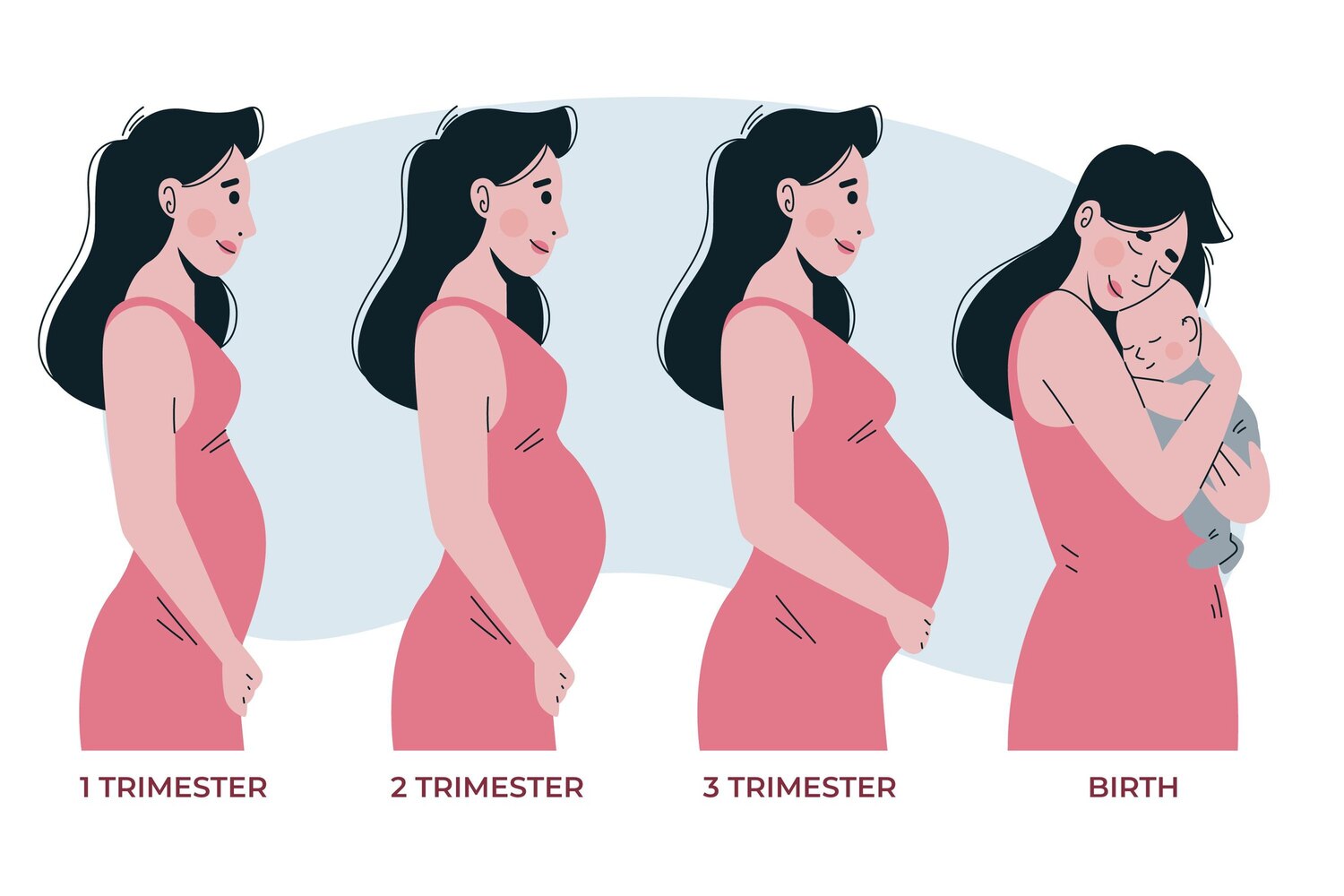
Trimesters create another layer of confusion. They divide pregnancy into three broad stages, but there are different conventions for the exact start and end points. A common approach is first trimester through 13 weeks and 6 days, second trimester from 14 weeks through 27 weeks and 6 days, and third trimester from 28 weeks onward.
Other sources may draw the line slightly differently. The most important thing is not to chase the perfect universal boundary. Use your own care team’s timeline if a particular date matters for your care.
Why apps disagree
Apps may use different definitions for months and trimesters. Some divide 40 weeks into nine groups. Some use calendar months from your due date. Some display completed weeks while others describe the week you are currently in. These choices can make the labels look inconsistent.
For example, at 20 weeks and 0 days, you have completed 20 weeks and you are beginning the 21st week of pregnancy. An app that says week 21 is not necessarily disagreeing with one that says 20 weeks. It may simply be using a different wording convention.
The due date is still the key reference
Rather than trying to convert every week into a month, keep your estimated due date as the main anchor. If you know the due date, a calculator can tell you your current gestational age and the number of weeks remaining.
This is especially helpful when dates change after a scan. A revised due date can update the week count precisely. A month label will remain a rough description either way.
Planning in real life
Months can be useful for broad planning. You might plan to tell family around the end of the first trimester, think about work arrangements in the third trimester, or organise practical tasks during the final couple of months.
For anything that needs an exact date, use weeks. Ask your clinician if you are unsure which week they mean. This is particularly useful for scans, screening windows, medication questions or travel advice.
Avoid the conversion trap
It is easy to spend time trying to reconcile every app, chart and month label. Usually, this creates more noise than clarity. You do not need one perfect phrase that works in every context.
You can hold two simple ideas at once: your pregnancy is measured clinically in weeks, and you can use months casually when it helps people understand the general stage.
A calmer answer to “How many months are you?”
If you do not want to explain the whole system, a simple answer works: “I am 22 weeks, so roughly five months.” That is accurate enough for conversation and keeps your own timeline anchored in the more precise number.
The mismatch between weeks and months is not a flaw in your app or a sign you have misunderstood your dates. It is what happens when a 40-week medical timeline is squeezed into uneven calendar months. Use weeks for accuracy, months for a broad description, and let your due date be the point that ties the timeline together.
Practical next steps
Keep the information simple. Save the date your clinic wants you to use, record any questions in one place, and avoid switching between multiple calculators or apps when you are already feeling uncertain. If you receive new scan information, ask what it changes for your timeline and whether you should update your due date. A reliable answer from your own care team is more useful than trying to interpret isolated numbers online.
When to ask for help
Contact your maternity team, GP or relevant clinic if you have a personal medical question, are worried about symptoms, or do not understand a result. A blog post can explain common language and date conventions, but it cannot assess an individual pregnancy. Asking early is not overreacting. It is a sensible way to get information that applies to you.
Keep the goal realistic
The goal of a timeline is not to make pregnancy fully predictable. It is to give you a useful frame for appointments, planning and everyday questions. It is okay if you still feel uncertain sometimes. Use the date as an anchor, then return to what is in front of you today.
Try the calculators
More in Pregnancy weeks
 Why Pregnancy Is Counted From Your Last Period, Not Conception3 September 2026
 Understanding Trimester Boundaries: Where One Stage Ends and Another Begins24 July 2026
 Gestational Age vs Fetal Age: Why They’re Different23 July 2026